

Journal · Leather Education
The Wallet in Your Pocket
Is Probably Lying to You
A complete guide to leather grading — full grain, top grain, genuine, bonded
The Truth About Leather
Walk into any store in India and you will find shelves of wallets stamped with the words ‘Genuine Leather.’ It sounds trustworthy. It sounds premium.But here is what most brands will never tell you: genuine leather is actually the lowest possible grade of real leather.The name is designed to sound better than it is.
At Raonero, we use full grain leather — the highest grade that exists. Understanding the difference between full grain, top grain, and genuine leather will change the way you shop forever.
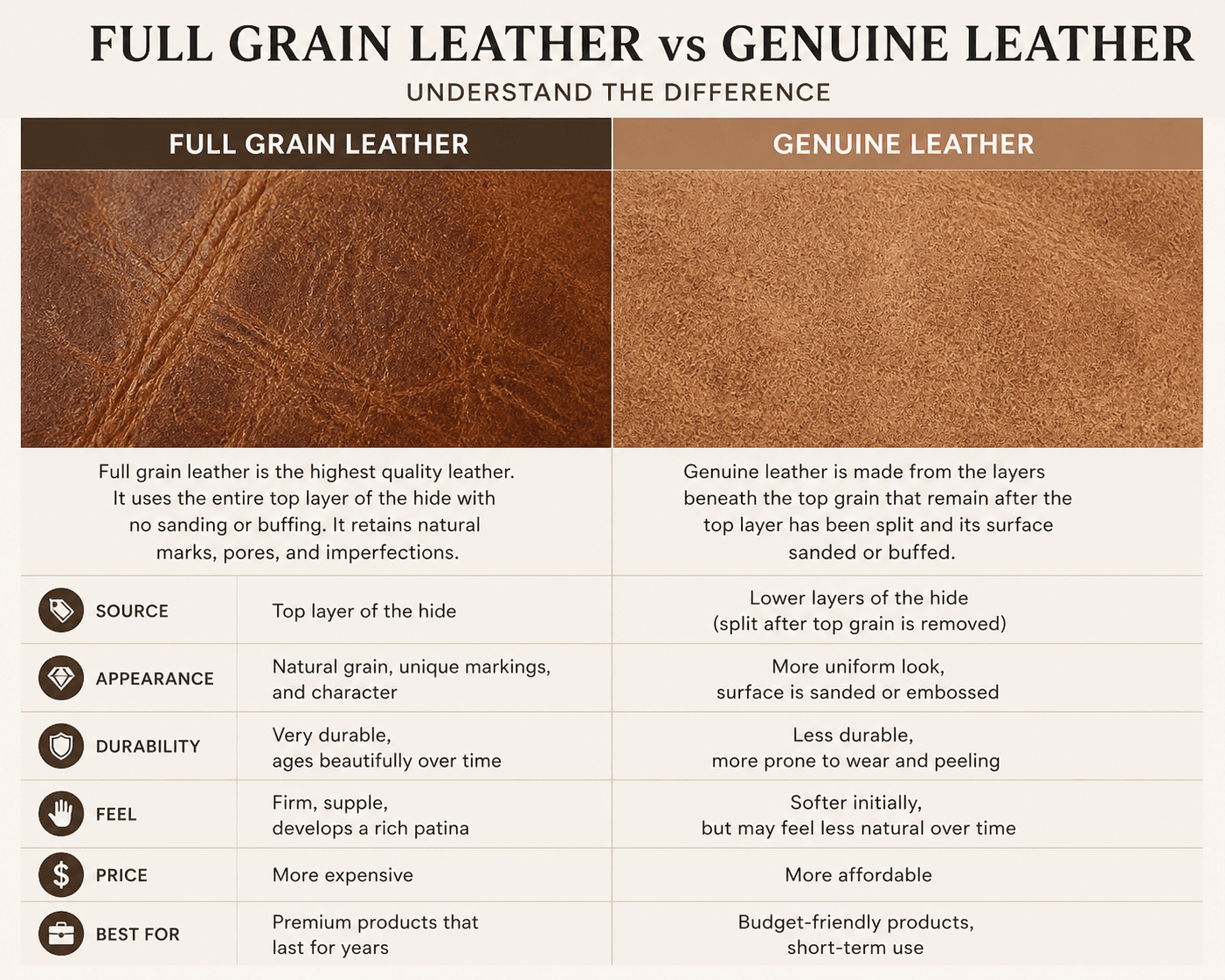
The Leather Grading System
What Nobody Explains
Leather comes from animal hide, and like any natural material, the hide has layers. These layers have very different properties — and the leather industry grades them accordingly. Most consumers have never heard of these grades, which is exactly how brands prefer it.
01
Full Grain Leather
Full grain leather comes from the very top of the hide — the outermost layer — with the natural grain left completely intact. It is never sanded, never corrected, never coated with plastic. This is the rarest, strongest, most beautiful grade of leather that exists. Full grain leather may show subtle natural marks. These are not defects. They are proof the material is real, unaltered, and alive with character. It is the only grade that develops a genuine patina over time.
02
Top Grain Leather
Top grain leather starts from the same outer layer as full grain, but the surface is sanded and buffed to remove any natural marks. A thin coating is then applied for a uniform appearance. Durable, but it will not develop the same patina as full grain.
03
Genuine Leather
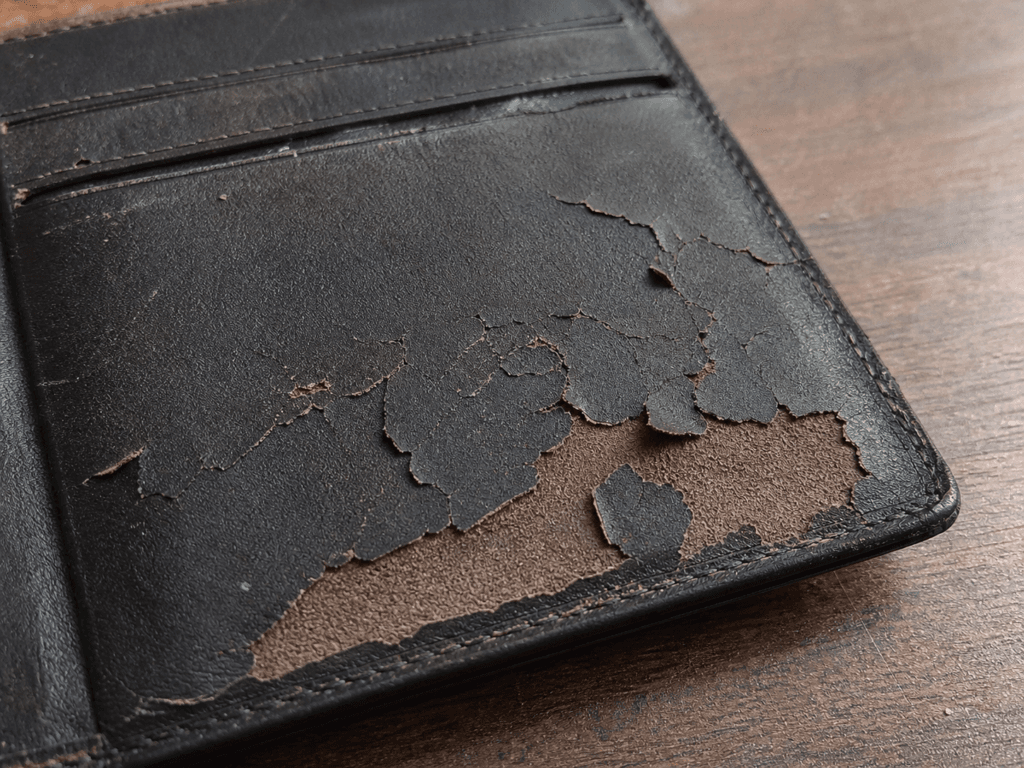
Made from the lower layers of the hide. Manufacturers sand it smooth, apply a thick polyurethane plastic coating, then emboss an artificial grain. The plastic coating begins peeling within 12 to 18 months. No structural integrity, no patina, no soul.
04
Bonded Leather
Not really leather at all. Ground leather scraps mixed with polyurethane binder, rolled onto a fibre backing sheet. Contains as little as 10–20% actual leather. Used in fast fashion accessories. Avoid it entirely.
Side-by-Side Comparison
← Swipe to view full comparison →
| Feature | Full Grain | Top Grain | Genuine | Bonded |
|---|---|---|---|---|
| Surface treatment | None — natural grain intact | Sanded + coated | Sanded + plastic coated | Manufactured surface |
| Durability | 20–50+ years | 10–15 years | 1–3 years | 1–2 years |
| Develops patina? | Yes — deeply | Slightly | No | No |
| Water resistance | Moderate (natural) | Good (coating) | Poor (peels) | Poor (flakes) |
| Price (India) | ₹2,000 – ₹10,000+ | ₹800 – ₹3,000 | ₹200 – ₹800 | ₹100 – ₹400 |
| Long-term value | Appreciates in character | Neutral | Depreciates rapidly | Disposable |
How to Spot Fake Leather in Indian Markets
India’s leather market is flooded with products labelled ‘genuine leather’ or even ‘pure leather’ that are nothing more than bonded or synthetic materials. Here is how to protect yourself before you buy.
1
The Water Drop Test
Place a small drop of water on the surface. Full grain leather absorbs it slowly, leaving a faint dark mark. Coated or synthetic leather repels it — the plastic coating keeps water out.
2
The Edge Test
Look at the edge of the leather. Full grain leather shows a natural fibrous edge. Genuine and bonded leather often shows a compressed, rubbery, or layered edge where the plastic coating ends.
3
The Bend Test
Fold the leather gently. Full grain leather folds naturally and returns to shape with subtle creasing. Genuine leather may crack or show white stress marks.
4
The Smell Test
Real leather has a distinct earthy, organic smell. Synthetic leather smells of chemicals or plastic. Trust your nose.
5
The Price Test
Full grain leather wallets in India start at roughly ₹1,500–₹2,000 for a quality handmade piece. If a wallet is priced under ₹500 and claims to be leather, it is almost certainly not full grain.
The Patina: Why Full Grain Leather Tells Your Story
A genuine leather wallet looks the same on day one as it does on day 500 — except it is peeling, fading, and falling apart. It has no memory.
Full grain leather works in the opposite direction. The edges darken first. Then the surface deepens in tone. This is the patina, and it is irreplaceable.
Does Full Grain Leather Peel?
Never. Full grain leather has no plastic coating, so there is nothing to peel. The surface changes over time through patina, softening, and darkening — all desirable changes. If a leather product is peeling, it is by definition not full grain leather.
The question “why is my wallet peeling?” is one of the most common leather questions asked in India. The answer is always the same: the wallet is made from genuine or bonded leather with a plastic coating, not real full grain leather.
Why Raonero Uses Only Full Grain, Vegetable-Tanned Leather
Every wallet we make at Raonero begins with vegetable-tanned, full grain leather sourced from certified tanneries. We choose vegetable tanning — a slow, traditional process using natural tannins from tree bark — because it produces leather that ages more beautifully, is safer for the craftsperson, and is more gentle on the environment.
We then hand-dye each piece using alcohol-based dyes applied by brush. No spray, no dip. This means the colour builds gradually, creating depth and variation that machine-applied dye can never replicate. The result is a wallet that does not just function. It matures.
Frequently Asked Questions
Never. Full grain leather has no plastic coating, so there is nothing to peel. The surface changes over time through patina, softening, and darkening — all desirable changes. If a leather product is peeling, it is genuine, bonded, or synthetic leather, not full grain.
Technically yes, but only barely. Genuine leather is made from the lowest-quality layers of the hide and covered with a polyurethane plastic coating. It contains real leather fibres, but the product behaves more like plastic than leather. It will not age well and typically peels within 1–2 years.
Hidesign uses full grain leather for their premium products and vegetable tanning, which is part of why they have a strong reputation in India. However, their entry-level products may use lower grades. Always check the product description for the specific grade.
Bonded leather is manufactured from leather scraps ground into powder, mixed with polyurethane binder, and rolled onto a backing sheet. It contains as little as 10–20% leather and behaves more like synthetic material than leather. Avoid it entirely.
Raonero makes all wallets from vegetable-tanned, full grain leather sourced from certified tanneries. Each wallet is hand-dyed and saddle-stitched in limited batches. Visit raonero.com/shop for the current collection.